

 Brasil
Hydration for training
Learn to estimate sweat rate and plan access to fluids during training and racing.
By Gavu · Updated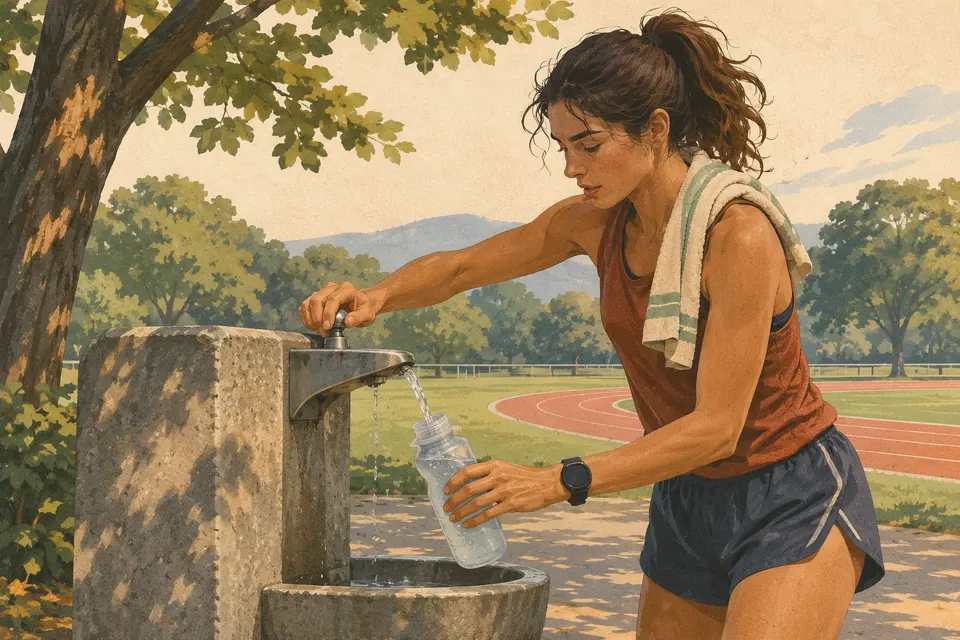
At a glance
The same bottle might last through a short workout and run dry early on a long, hot ride. NATA recommends matching fluid replacement to individual losses. Compare similar sessions and check refill points to account for both dehydration and overdrinking.
NATA — Fluid Replacement for the Physically ActiveA run near home, a route without fountains, and a race with widely spaced aid stations call for different preparations. Start by estimating what you lose in the conditions you usually train in.
Estimate sweat loss under your workout conditions
Weigh yourself before and after under similar conditions, using the same scale and dry clothing. Log the workout duration and how much you drank. If you urinated during the session and measured the volume, subtract it. One pound of mass lost is roughly 15.3 US fluid ounces of water in this estimate.
The chart uses a one-hour workout. For a 90-minute session, divide estimated total loss by 1.5 to get an hourly rate. Repeat the observation in other weather and at other intensities. The rate estimates sweat loss for that session and is one piece of information for planning hydration.
Example of a one-hour workout without urination. Dividing by the duration gives about 30.4 US fl oz of sweat per hour under those conditions.
Plan where you can get water
For a race, locate the first aid station and the longest stretch without water on the organizer’s map. On a route that passes the same fountain twice, confirm it is available when you expect to reach it. Time until the next refill tells you more for this decision than the total distance.
For a long workout, test the bottle and the drink you plan to use at the race. Note whether it was easy to drink on the move, whether you could refill, and how your stomach felt. Bring that record to a similar workout before changing several things at once.
When drinking too much becomes a problem
During prolonged exercise, drinking more fluid than your body loses can dilute sodium in the blood. Exercise-associated hyponatremia can also happen with excessive consumption of sports drinks.
Consider workout conditions, exposure time, and your observed losses before adopting a fixed volume. Finishing heavier than you started indicates a net gain in mass. Confusion or altered consciousness during or after exercise calls for emergency care.
Frequently asked questions
Does everyone need the same amount of fluid per hour?
Sweat loss varies by person and conditions. A fixed target can fall short of or exceed your needs.
NATA — Fluid Replacement for the Physically ActiveIs drinking more always protective?
Excessive fluid intake during prolonged exercise raises the risk of hyponatremia. Plan your intake around your losses and the conditions.
NATA — Fluid Replacement for the Physically ActiveCan heat change sweat rate?
Yes. Compare sessions of similar duration and intensity and log temperature, humidity, clothing, and fluid intake. Each estimate describes the conditions in which you measured it.